
Avascular Necrosis. Three heavy medical words, but the idea behind them is simple. "Avascular" means without blood supply. "Necrosis" means tissue death. Put together: AVN is bone dying because it stopped getting blood.
This article explains AVN in plain language: what happens inside your hip, why it happens, who is at risk in India, and the early signs that, if you act on them, can save your natural joint.
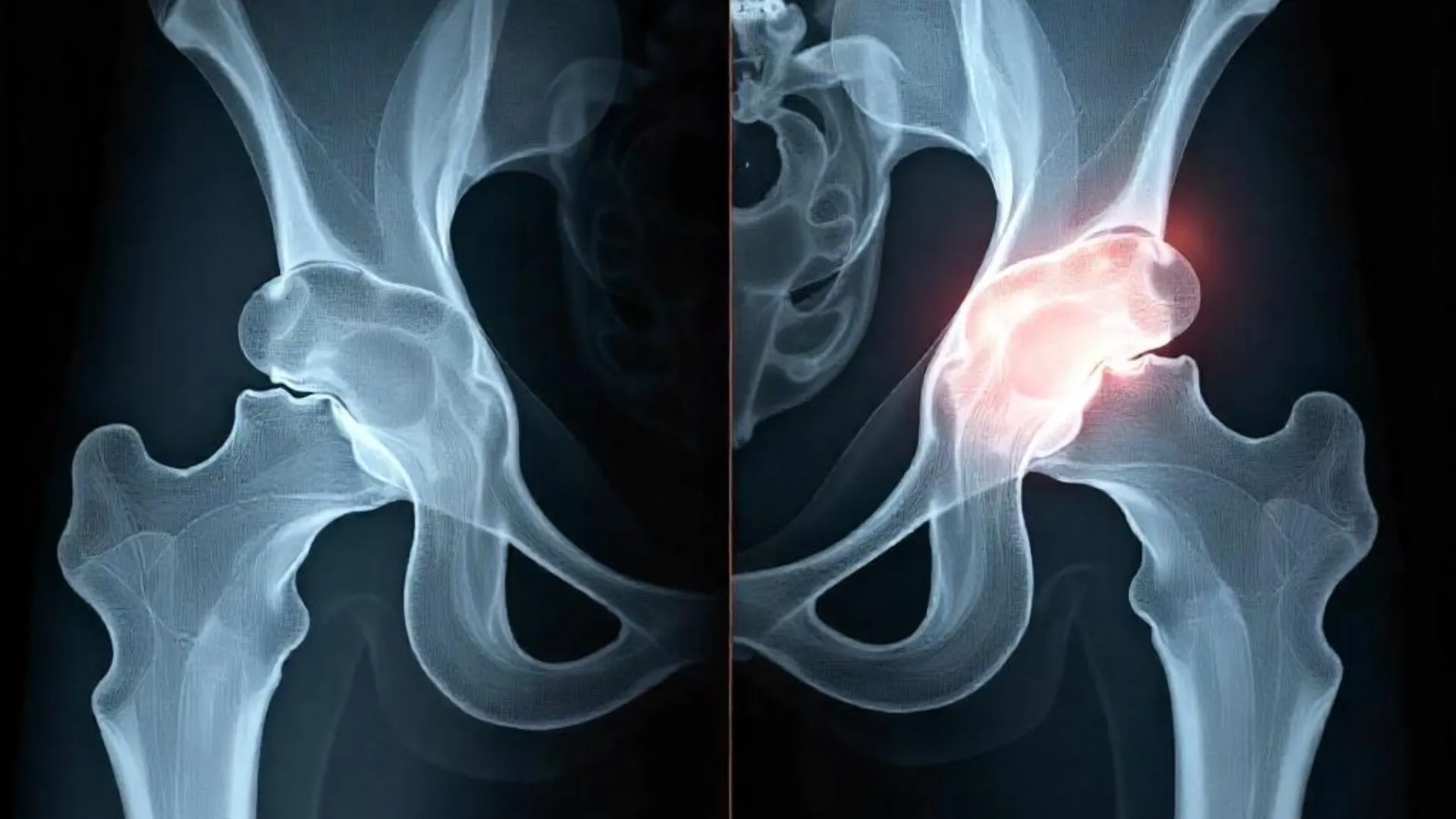
Bone is alive: and it needs blood
Most people think of bone as something solid and lifeless, like the frame of a building. In reality, bone is living tissue. It has cells, it repairs itself daily, and it needs a constant blood supply to stay alive.
The ball of your hip joint, the femoral head, has a special weakness: only a few small blood vessels feed it. If those vessels get blocked or damaged, the bone inside the ball begins to die. That is AVN.
Dead bone loses its strength. Under the weight of daily walking, the weakened ball can slowly crack and cave in, like a road collapsing over a washed-out foundation. Once the ball loses its round shape, the joint is permanently damaged.
Who gets AVN in India?
AVN is not rare in India, and it hits younger people than most joint diseases, typically between 25 and 50 years of age. The common causes of AVN include:
- Long-term steroid use: the single biggest factor. Steroids prescribed for asthma, autoimmune diseases, skin conditions, or COVID treatment can affect bone blood supply.
- Heavy alcohol consumption: regular heavy drinking damages the small vessels feeding the femoral head.
- Injury: a hip fracture or dislocation can tear the blood vessels directly.
- Sickle cell anemia: abnormal blood cells can block the small vessels.
- Smoking: nicotine narrows blood vessels everywhere, including in bone.
- Post-COVID complications: a combination of the virus's effects and steroid treatment has produced a wave of AVN cases in India.
- No known cause: in some patients, AVN appears without any risk factor. Doctors call this idiopathic AVN.
The early signs you should never ignore
AVN starts quietly. In its earliest stage there may be no pain at all. When symptoms do begin, they look like this:
- A dull ache or throbbing pain in the groin (the crease at the top of your thigh, often described in India as "pocket area" pain), hip, or buttock
- Pain that worsens with walking, standing, or climbing stairs
- Difficulty sitting cross-legged on the floor, often the first thing Indian patients notice
- A limp that appears gradually
- Stiffness, the hip does not move as freely as before
How doctors confirm AVN
An X-ray is usually the first test, but here is the catch: X-rays look normal in early AVN. The gold standard is an MRI scan, which can spot bone changes months or years before an X-ray shows anything. If AVN is suspected, specialists usually scan both hips, because AVN affects both sides in many patients. Our AVN diagnosis guide explains each test.
What happens without treatment?
AVN is progressive. It moves through four stages, from invisible damage (Grade 1) to complete collapse of the femoral head (Grade 4). The speed varies, but the direction rarely does. Untreated AVN typically ends in a collapsed, arthritic, painful hip that needs replacement. Read about all four stages of AVN.
The hopeful part: caught early, AVN is very treatable
Here is what matters most: in Grades 1 and 2, the bone's shape is still intact, and treatment can work with your body to heal it. Options like SVF regenerative therapy use your own cells to support bone repair in a 30-minute, day-care procedure. Even core decompression with BMAC can preserve the joint in suitable patients.
Every week of delay pushes you toward fewer, bigger options. Every week of early action protects your natural hip.
Worried about your hip? Start with a free consultation
If anything in this article sounded familiar, do one simple thing: call +91 82230 82900. We offer a free consultation. We review your MRI (or guide you on getting one), explain what is happening in plain language, and lay out your options. No pressure, no obligation. Explore the complete AVN Treatment Guide or read all treatment options available in India.