Avascular Necrosis (AVN) is a condition in which bone tissue dies because it does not get enough blood supply. This disease is also called osteonecrosis.
In the beginning, AVN usually causes mild hip or joint pain, so many people ignore it. But inside the bone, damage continues silently. If AVN is not treated early, the bone can collapse and the joint can stop working properly.
Early diagnosis is very important because AVN can often be treated without joint replacement if caught on time.
What Happens in Avascular Necrosis?
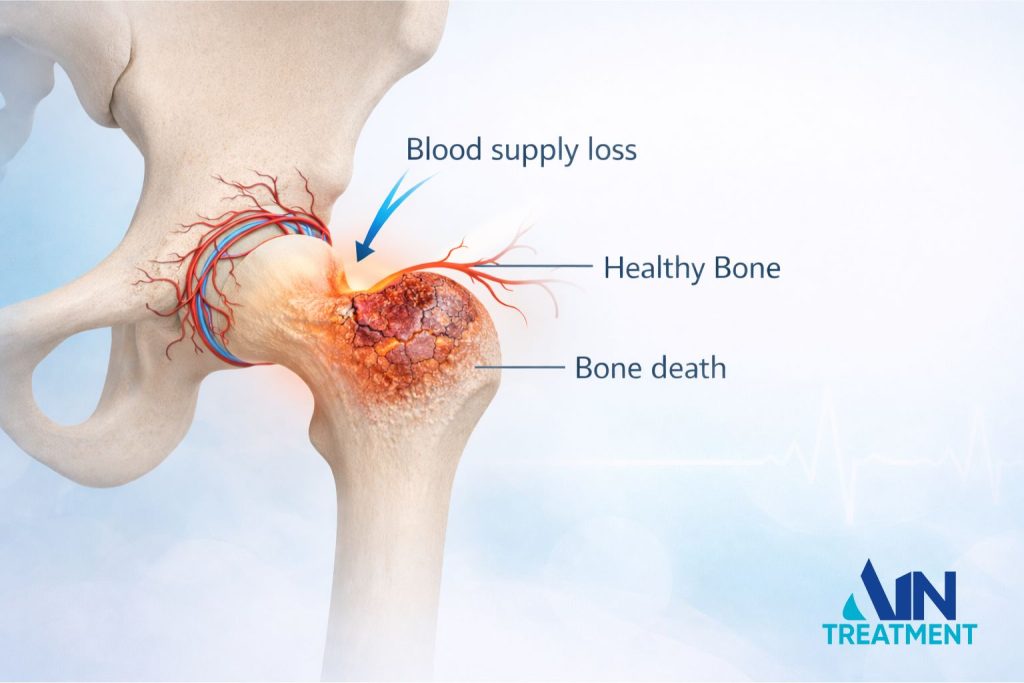
In avascular necrosis, the blood supply to a part of the bone is reduced or completely blocked. Blood is needed to keep bone cells alive. When blood does not reach the bone, bone cells start to die.
As time passes:
- The bone becomes weak
- Small cracks develop inside the bone
- The shape of the bone changes
- The joint surface may collapse
In the hip, this usually affects the femoral head, which is the round upper part of the thigh bone. Once the femoral head collapses, normal walking becomes painful and difficult.
Causes of Avascular Necrosis
AVN develops when something blocks or damages the blood vessels that supply the bone.
Common Causes of AVN
- Long-term or high-dose steroid medicines
- Excess alcohol consumption
- Hip injury, fracture, or dislocation
- Blood clotting disorders
- Autoimmune diseases
- Organ transplant
- Radiation therapy
In many patients, AVN occurs due to steroids or alcohol, even without any injury.
Steroid Use and AVN
Steroids are commonly used for asthma, allergies, arthritis, and autoimmune diseases. Long-term steroid use can:
- Increase fat levels in blood
- Block small blood vessels
- Reduce blood flow to bones
This is a major cause of AVN, especially in young adults.
Alcohol and AVN
Heavy alcohol intake can:
- Damage blood vessels
- Increase fat deposits in blood
- Reduce oxygen supply to bone
This makes alcohol one of the leading causes of AVN of the hip.
Early Signs and Symptoms of AVN
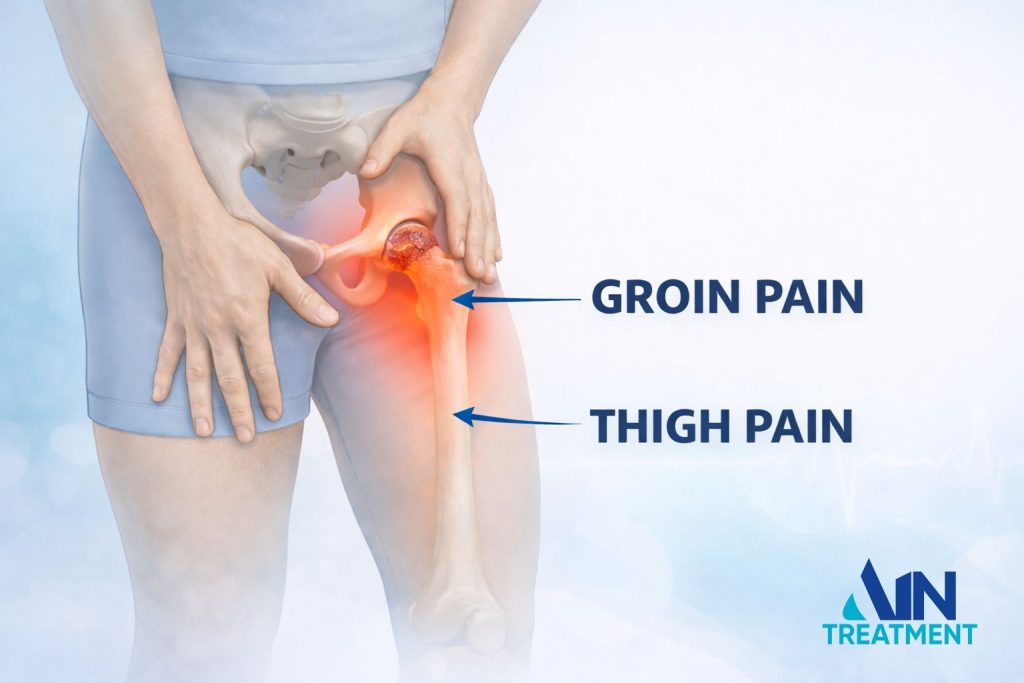
In the early stage of AVN, pain may be mild and X-rays can appear normal. As the disease progresses, bone damage increases step by step.
To understand how AVN worsens over time, you can read a detailed explanation of the stages of avascular necrosis.
Early Symptoms (Stage When AVN Is Often Missed)
- Mild pain in hip, groin, thigh, or buttock
- Pain after walking or standing for long time
- Pain that improves with rest
- Mild stiffness in the joint
At this stage, X-rays are often normal, so AVN is frequently missed.
Symptoms as AVN Gets Worse
- Pain becomes more frequent
- Limping while walking
- Difficulty sitting cross-legged
- Pain while climbing stairs
- Reduced hip movement
Advanced Stage Symptoms
- Constant severe pain
- Pain even during rest or sleep
- Difficulty walking without support
- Collapse of the hip joint
At this stage, hip replacement surgery is usually required.
Why Early Diagnosis of AVN Is Very Important
AVN does not heal on its own. Once bone tissue dies, damage continues to increase.
Benefits of Early Diagnosis
- Natural joint can be saved
- Joint replacement can be avoided or delayed
- Better movement and quality of life
- Less long-term pain
Best Test for Early AVN
MRI scan is the best test to detect AVN early, even when X-rays look normal.
Who Is at Higher Risk of AVN?
You are at higher risk if you:
- Have taken steroids for a long time
- Drink alcohol regularly
- Had a hip injury or fracture
- Have autoimmune disease
- Have undergone organ transplant
- Have unexplained hip or groin pain
AVN is commonly seen in people aged 30 to 65 years and affects males more often.
Can Avascular Necrosis Be Prevented?
Not all cases can be prevented, but risk can be reduced by:
- Avoiding unnecessary steroid use
- Limiting alcohol intake
- Getting joint pain checked early
- Regular follow-up if you are high risk
Ignoring pain is the biggest mistake.
When Should You See a Doctor?
See an orthopedic doctor if:
- Hip or joint pain lasts more than 2 weeks
- Pain occurs without injury
- Pain increases with walking or activity
- You have a history of steroid use or alcohol intake
Early treatment can save your joints.
Key Insights About AVN and Risk Patterns
These insights help explain the clinical importance of identifying AVN at the earliest possible stage, before irreversible joint damage occurs.
| Factor | What Studies Show | Why It Matters for AVN Staging |
| Incidence | Approximately 10,000–20,000 new AVN cases of the femoral head are diagnosed each year in the United States | Although AVN is not very common, it represents a significant cause of hip joint damage when diagnosis is delayed |
| Most Affected Age Group | Adults between 30 and 50 years of age are most commonly affected | AVN often impacts individuals during their most active and productive years, making joint preservation especially important |
| Gender Pattern | AVN occurs more frequently in males, with reported male-to-female ratios of approximately 3:1 | Higher exposure to known risk factors may contribute to earlier progression across AVN stages |
| Bilateral Hip Involvement | In 40% to 70% of cases, the opposite hip may also become affected, often within two years | Even when symptoms are present in one hip, stage-wise monitoring of both hips is essential |
Brief Overview of AVN Treatment
Treatment depends on the stage of AVN:
- Early stage: medicines, activity restriction, physiotherapy, joint-saving procedures
- Advanced stage: joint replacement surgery
Results are much better when AVN is treated early.
Final Message
Avascular Necrosis (AVN / osteonecrosis) is a condition where hip bone tissue dies due to lack of blood supply. Pain may be mild at first, but damage continues inside the bone. Early diagnosis and treatment can help save the natural joint and avoid surgery.
If you have ongoing hip pain, do not ignore it.
Frequently Asked Questions (FAQs)
1. Is AVN the same as osteonecrosis?
Yes. Avascular Necrosis and osteonecrosis mean the same condition.
2. Is AVN a serious disease?
Yes. If untreated, it can cause permanent joint damage.
3. Can AVN go away on its own?
No. AVN always needs medical treatment.
4. Is AVN common in young people?
Yes. Many patients are in their 20s and 30s.
5. Can hip replacement be avoided in AVN?
Yes, if AVN is diagnosed early.
Medical Disclaimer:
This content is for informational purposes only and does not replace professional medical advice, diagnosis, or treatment. Always consult a qualified healthcare professional for personal medical concerns.