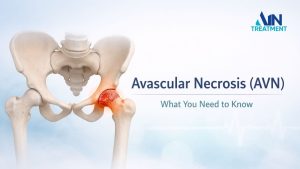
Avascular necrosis is a progressive bone condition that mainly affects the hip joint. Early diagnosis is important because treatment decisions depend on the stage of the disease and the extent of bone damage.
Today, avascular necrosis treatment in India includes advanced non surgical therapies as well as surgical options when required. In early stages, timely intervention can help preserve the natural joint and delay major surgery.
Symptoms of AVN
Symptoms typically progress gradually.
In early stages, patients may experience mild groin or hip pain during walking or weight bearing. As the condition advances, pain becomes persistent and may occur even at rest. Stiffness, reduced range of motion, and difficulty climbing stairs are common signs.
If hip pain lasts more than a few weeks, especially in individuals with risk factors like steroid use or alcohol consumption, medical evaluation is recommended.
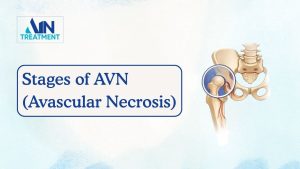
Stages of AVN and Why They Matter
AVN progresses through identifiable stages:
Stage 1: MRI changes without visible X-ray abnormalities
Stage 2: Structural bone changes become visible
Stage 3: Early collapse of the femoral head
Stage 4: Advanced arthritis and joint damage
You can understand the classification in detail here: Stages of AVN explained
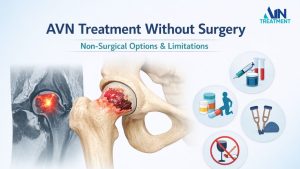
Non-Surgical Avascular Necrosis Treatment (Primary Focus)
In early stage AVN, particularly Stage 1 and early Stage 2, non surgical treatment plays a major role. The goal is to improve blood supply, reduce inflammation, support bone healing, and delay progression.
Below are the main non surgical avn treatment options available in India.
1. SVF Therapy for AVN
SVF therapy for AVN is a regenerative treatment approach being offered at selected specialized centers.
SVF, or Stromal Vascular Fraction, is derived from the patient’s own adipose tissue. It contains a mixture of regenerative cells, including mesenchymal stem cells, growth factors, and vascular supporting cells. These cells are processed and injected into the affected area with the aim of promoting healing and improving local blood supply.
In early stage avascular necrosis treatment, SVF therapy is considered a joint preserving option. It may:
- Support bone regeneration
- Improve vascularity in the affected region
- Reduce inflammation
- Potentially delay the need for surgery
However, outcomes vary depending on disease stage and patient selection. SVF therapy is generally more effective before femoral head collapse occurs. Patients should discuss indications, evidence, and realistic expectations with their orthopedic specialist.
2. Activity Modification and Protected Weight Bearing
Reducing stress on the affected joint is often recommended in early AVN.
Doctors may advise limited weight bearing using crutches or walkers. Avoiding high impact activities can help prevent further structural damage while other treatments support healing.
Though simple, this step is important in early avascular necrosis treatment planning.
3. Medications for Symptom Control
Medications may be prescribed to reduce inflammation, relieve pain, and support bone metabolism.
These medications do not reverse bone death but may help manage symptoms and slow progression in selected patients.
4. Physiotherapy and Rehabilitation
Structured physiotherapy helps maintain joint mobility and muscle strength.
A guided rehabilitation plan improves joint stability, reduces stiffness, and supports functional recovery. Low impact exercises are usually recommended to minimize stress on the femoral head.
Physiotherapy plays a supportive role in both non surgical and post surgical avn treatment in India.
5. Bone Health Optimization
Managing underlying conditions such as osteoporosis, blood disorders, or metabolic diseases is essential.
Lifestyle modifications, including limiting alcohol consumption and careful steroid monitoring, are also important components of long term management.
For a focused discussion on conservative care, you can also read: AVN treatment without surgery
When is Surgery Required
If AVN progresses despite conservative care, surgery may be necessary.
Core Decompression
Core decompression is performed before femoral head collapse. It reduces internal bone pressure and may improve blood supply. It is more effective in early to mid stage disease.
Total Hip Replacement
In advanced stages with collapse and arthritis, total hip replacement becomes the most reliable avascular necrosis treatment. The damaged joint is replaced with an artificial implant to restore movement and reduce pain.
Cost of Avascular Necrosis Treatment in India
The cost of avascular necrosis treatment in India depends on the stage and type of procedure.
Non surgical options are generally less expensive than surgery.
Core decompression costs less than total hip replacement. Overall, AVN treatment in India is considered more affordable compared to many international healthcare systems.
Recovery Timeline
Recovery varies by treatment.
- After non surgical therapy, monitoring and activity modification continue over months.
- After core decompression, limited weight bearing is usually advised for several weeks.
- After hip replacement, most patients resume routine activities within 6 to 12 weeks with proper physiotherapy.
Conclusion
Avascular necrosis is a progressive condition where early diagnosis makes a significant difference. In early stages, non surgical avascular necrosis treatment including SVF therapy and structured rehabilitation may help preserve the joint.
In advanced stages, surgical options such as core decompression or hip replacement provide reliable outcomes. Consulting an orthopedic specialist early allows for stage based and individualized treatment planning.